
Blog / / 3 min read
How to identify, clean, and prevent roof algae and moss
Dark streaks and green moss patches running down your roof shingles are not only unsightly, they can compromise shingle integrity. Learn the difference between harmless algae and destructive moss, and how to clean your roof safely.
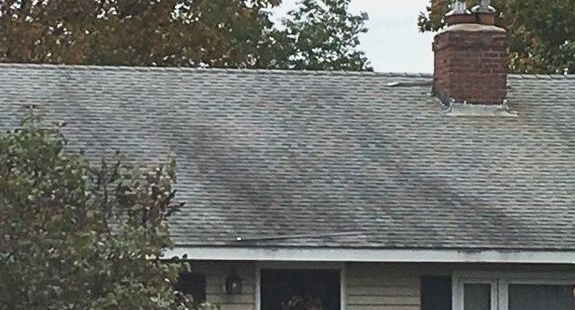
What causes dark stains on roofing shingles?
Many Maryland homeowners notice unsightly black or dark brown vertical streaks forming across their asphalt roofs, particularly on northern exposures or shaded roof planes. These dark streaks are not dirt, soot, or standard mold. In most cases, the culprit is Gloeocapsa magma, an airborne blue-green algae. The algae spore travels on the wind, settles on moist shingles, and feeds on the crushed limestone filler used in modern asphalt shingle manufacturing. To protect itself from harsh ultraviolet sunlight, the algae produces a dark pigmented sheath, creating the characteristic dark staining.
Algae vs. moss: Cosmetic concern vs. structural threat
While algae and moss are often mentioned together, they affect your roof very differently:
- Roof algae (Gloeocapsa magma): Primarily a cosmetic issue in its early stages. While it makes a roof look aged and neglected, it does not immediately degrade shingle waterproofing.
- Green roof moss: A serious structural hazard. Moss has root-like structures (rhizoids) that anchor deep into shingle granules, lifting shingle edges and exposing the asphalt mat. In winter, trapped moisture in moss freezes and expands, cracking shingles and causing leaks.
- Lichen: A symbiotic combination of fungi and algae that bonds tenaciously to shingle surfaces, eroding ceramic granules when removed aggressively.
Why you must NEVER pressure wash your roof
The most dangerous mistake a homeowner or amateur cleaner can make is using a high-pressure power washer on asphalt shingles. High-pressure water blasts the protective ceramic granules right off the shingles, exposing the underlying asphalt to rapid UV degradation and cutting years off the roof's lifespan. Power washing can also force water upward underneath shingle laps, soaking roof sheathing and insulation.
Safe chemical roof cleaning methods
The correct and manufacturer-approved method for removing roof algae and moss is a gentle, low-pressure chemical application (often called soft washing). A specialized cleaning solution composed of sodium hypochlorite, water, and mild surfactants is applied at low pressure, allowing the chemical to kill the algae and moss at the spore level. Once the organisms are neutralized, gentle rinsing or natural seasonal rainfall washes them away without damaging granules.
Preventing roof stains from returning
To keep stains from returning, consider installing zinc or copper strips along the roof ridge. When rainwater washes over the metal strips, minute amounts of zinc or copper ions wash down the roof, creating an environment where algae and moss cannot survive. Additionally, trimming overhanging tree branches increases sunlight and airflow, allowing shingles to dry quickly after rain.
Evaluating your roof with local experts
If your roof is covered in heavy moss growth, shingles may already be damaged beneath the growth. Consult On Top Home Improvements for an honest assessment of whether cleaning or shingle replacement is your best course of action.
Professional roofing standards and manufacturer warranty protection
Adhering to strict manufacturer installation specifications is essential to keep shingle warranties fully valid. In Maryland, residential roofs endure harsh weather fluctuations, from winter freeze-thaw cycles and heavy snowpack to humid summer thunderstorms with high wind gusts. At On Top Home Improvements, owner Dan Cox and our experienced roofing specialists ensure every installation includes complete tear-off down to bare sheathing, inspecting plywood decking, installing self-adhering ice and water shield along eaves and valleys, applying aluminum drip edge, and installing continuous ridge ventilation for balanced attic airflow across Damascus, Frederick, Silver Spring, and Columbia homes.